

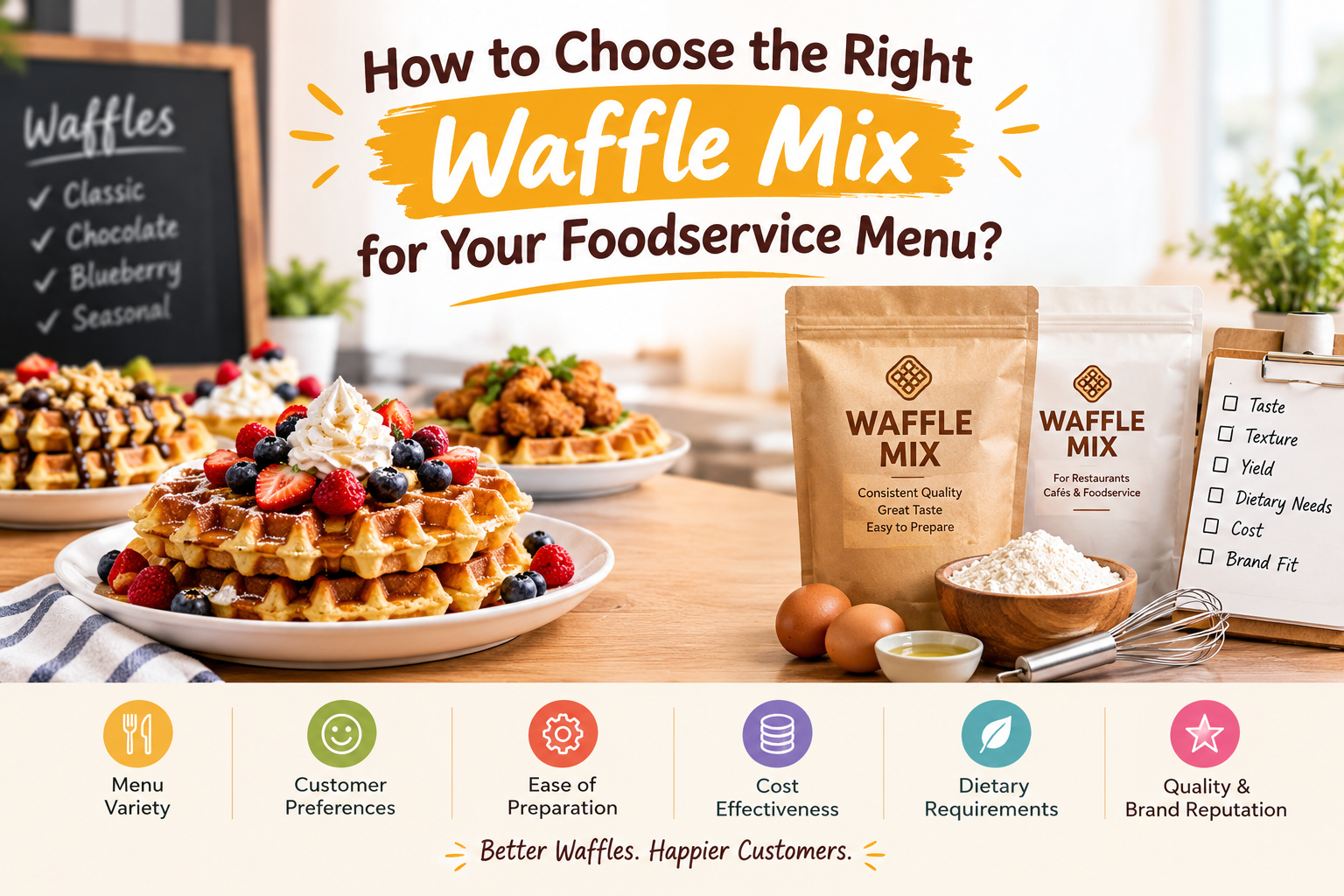

Waffles have become a versatile addition to professional foodservice menus, featuring in breakfast spreads, brunch offerings, café menus and dessert presentations. Their appeal lies in the range of textures, shapes and serving options they offer. From thick waffles served with fruit and sauces to crisp varieties paired with ice cream, the final product depends on the formulation, preparation method and cooking conditions.
For professional kitchens, selecting the right waffle mix involves more than choosing a preferred flavour or texture. The mix needs to suit the menu concept, available equipment, preparation workflow and expected service volume. Consistency across batches is equally important, particularly in operations where multiple staff members prepare the same products throughout the day.
Understanding the different types of waffle mixes and their applications can help foodservice operators make informed decisions. This guide explores the key factors to consider when selecting a waffle mix, comparing waffle styles and matching products to different menu requirements.
1. Start by Defining Your Menu Requirements
Determine the use of waffles in the menu before choosing a waffle mix. A breakfast-oriented restaurant will need different kinds of waffles than a dessert shop or a quick service restaurant.
The intended application influences the desired texture, thickness, portion size and serving method.
Breakfast and Brunch Offerings
The waffles are commonly served at breakfast and brunch with fresh fruit and waffle toppings (such as syrup, butter, cream or other toppings). These additions should have a suitable base on the waffle and should not lose their shape when served.
Thicker, Belgian-style waffles are often used for this purpose as they have deeper pockets which allow for better support of toppings. They are also large enough to be used for plated displays, with the waffle forming the prominent feature of the dish.
Dessert Menus
For dessert menus featuring waffles, they can be served as standalone offerings depending on the flavours or toppings and can also be paired with ice cream or sundaes.The preparation method and delay in service should be taken into consideration during product trials because of the possibility of softening over time due to a damp surface.
High-Volume Foodservice Operations
In buffets and other high-volume kitchens, one needs to take into account how quickly food needs to be prepared and how to ensure that the batches are the same in terms of consistency as well as the ease of maintaining product quality throughout the service.
The selected mix should be compatible with the equipment and existing preparation methods. Cooking the waffle under service conditions can aid in assessing the texture and appearance to ensure the desired properties are retained from the time it is cooked until it is consumed.
Requirements can be defined at the beginning and it is easier to shortlist products that meet the requirements.
2. Choose the Right Waffle Texture
One of the things to take into account when choosing a waffle mix is the texture. These various types of waffles have different uses and may be used in a different dish based on the presentation and eating experience.
Belgian-Style Waffles
Belgian-style waffles are thicker than many types of waffles. They tend to be very deep-pocketed and have a golden outside and a soft inside, depending on the recipe and method of cooking.
The deep pocket can hold toppings like fruit, syrups and cream, and thicker structure can be a great base for plated food. They are also suitable for presentations where toppings and accompaniments are integral in the presentation.
To check a mix for Belgian-style waffles, evaluate the final product by checking for thickness, texture of the product, browning and uniformity throughout portions. These qualities should match that of the serving style.
Crispy Waffles
Crispy waffles are appropriate for use in applications that require a distinct crispy texture in the waffle. They can be used as snacks or added to dessert preparations in sauces, desserts and other parts..
A crispy waffle mix may be appropriate when the menu requires a crisper finished product, depending on the formulation and preparation method.
There are several factors that affect crispness of the waffles, such as batter consistency, waffle iron temperature, cooking time and cooling methods. Waffles can be softened by using a steam bath or by piling on hot waffles or covering them while they are still steaming.
For professional kitchens, it is helpful to check the waffle right after it has been cooked, and then after the usual period of kitchen preparation to table. This will help you decide if the texture is appropriate for the needs.
3. Evaluate Preparation Requirements and Kitchen Workflow
The kitchen should be practical and have a waffle mix to meet those needs. It can be challenging to have consistent use of a product, even if it achieves the desired texture, if it is not prepared correctly in the context of the operation.
Preparation Method
Review the manufacturer’s preparation instructions prior to introducing a mix into regular production. Preparation may consist of adding specific liquids or ingredients, mixing to the specified consistency.
The sequence of ingredients, mixing time and batter consistency may have an impact on the final product. Thickness variations, browning or texture may occur due to deviations from the recommended process, particularly for the thickest or thinnest sections.
Standardisation of preparation procedures ensures that kitchen teams get the same results on each shift.
Equipment Compatibility
There are several different designs of waffle iron plates, including depth, heating and temperature control. These differences can affect the preparation time, the color of the waffle and the texture of the waffle.
Test the mix on the equipment to be used in service before taking it on board. Test the distribution of the batters, release, cooking time and texture.
If multiple outlets are operating with different equipment, trials can be used to determine if there is a need to adjust the equipment to achieve the same results.
Service Volume
Product selection should also be affected by expected production volume. A small café making individual orders might be more concerned with flexibility, whilst a busy café may focus more on repeatability and preparation time.
Think about how the batter will be prepared, refilled and prepared during service. It is important to follow the manufacturer’s recommendations for storage and handling procedures as well as applicable food-safety procedures in order to keep the preparation flow appropriate.
4. Consider Gluten-Free Menu Requirements
The scope of products a foodservice operation provides may be determined by the dietary needs. Offering a gluten-free product can be a viable choice for customers who need or prefer alternative products that do not contain gluten.
A gluten free waffle mix can be considered when developing a separate gluten-free waffle offering. Its suitability should be assessed according to the product specifications, preparation instructions and intended application.
The consistency, structure and browning of gluten-free mixes might differ from their non-gluten counterparts. It is important to test the waffle after it is prepared, not to assume the same settings will be equivalent for all formulations.
There is also a need to pay attention to cross-contamination. In some cases, kitchens may need to work with wheat-based foods and there may be necessary storage and cleaning protocols and equipment practices. Precautions needed will vary based on the allergen information on the product and the food-safety standards that apply to the operation.
Menu entries must be descriptive enough to indicate the product specification and the precautions taken in preparing the product. This assists staff to clearly and responsibly communicate the options available.
5. Understand the Difference Between Waffle Mix and Pancake Mix
Waffles and pancakes can have some common ingredients, but the way they are cooked and the desired end result is not the same for both. The waffles are the ones that are formed between the heated plates, whereas pancakes are usually cooked on a flat heated surface.
These variations affect the texture, thickness and formulation that each product has. Mixes designed for one application cannot be assumed to be the same in the other.
When considering a pancake mix for menu development, it is important to verify the linked product’s intended application. The specified product is a vanilla waffle cone mix, which is generally designed for preparing thin products that can be shaped after cooking rather than conventional, fluffy pancakes.
The difference is important to foodservice operators because the batter must provide the desired structure and texture. If both waffles and pancakes are on the menu, use each mix separately and refer to the manufacturer for recommendations on each use.
6. Assess Consistency Across Batches
Consistency is essential when waffles are prepared for regular commercial service. Customers generally expect the same appearance, texture and portion size each time they order a particular item.
Several process variables can influence consistency:
- Ingredient measurement:Use the specified quantities and maintain a standard preparation procedure.
- Mixing:Follow the recommended mixing time and avoid unnecessary variation between batches.
- Batter consistency:Monitor the prepared batter for deviations that may affect spreading, thickness or cooking.
- Cooking temperature:Maintain suitable waffle iron settings and allow the equipment to recover between portions when required.
- Cooking duration:Establish a repeatable process based on the mix and equipment.
- Portion control:Use a consistent quantity of batter for each waffle.
- Serving conditions:Evaluate how the waffle performs between cooking and consumption.
Recording preparation settings during product trials helps kitchen teams establish a reliable standard operating procedure. Staff training is equally important, particularly when multiple employees prepare the same menu items.
7. Evaluate Menu Versatility and Serving Applications
A well-planned waffle menu can offer variety without requiring a completely different preparation workflow for every dish. The selected mix should support the intended applications while allowing the kitchen to maintain product quality.
Belgian-style waffles can form the base of breakfast plates and brunch dishes. Depending on the recipe, they can be paired with fruit, sauces, cream or savoury accompaniments.
Crispy waffles can be used in dessert presentations where crunch is desirable. Their toppings should be selected with attention to moisture, as wet ingredients may soften the surface over time.
Gluten-free waffles can provide another menu option when the product specifications and preparation procedures support the intended dietary requirements.
When developing the menu, consider whether each waffle variety serves a distinct purpose. Offering products with noticeably different textures and serving styles can create more meaningful variety than simply changing the toppings on the same base product.
8. Common Mistakes to Avoid When Selecting a Waffle Mix
A good waffle mix can still give poor results due to improper selection or preparation of it for use.
Choosing Based on Texture Alone
A crispy exterior or a tender interior might be desired; however they should match with the food menu and serving method. An instant waffle might not be suitable for a plated service or dine-in while a crispy waffle may not pair with dessert accompaniments by affecting its texture.
Ignoring Equipment Differences
One waffle iron may test a mixture differently than another one does. Variations of plates’ shape and heat properties may impact cooking duration, color development and consistency.
Changing the Formula Without Testing
Changing amounts of liquids to add may affect how thick your batter is for making a perfect waffles. Modifications need to be tested systematically prior to being included as a part of the standard procedure for preparing food items.
Overlooking Dietary and Allergen Information
Gluten free requirements and other allergen considerations should be met through specification of products as well as proper food handling practices in kitchens. Menu claims should never be based on assumptions.
Testing Only Freshly Cooked Waffles
The product test should show us what kind of waffle we want to make for serving at our restaurant. A single sample of freshly prepared portions might not be representative for testing its performance under busy service periods.
9. A Practical Checklist for Choosing the Right Waffle Mix
So, before you settle on a waffle mix to serve in your foodservice menu, check each of the items below:
- Menu application: Is it appropriate for breakfast, brunch, snack and/or dessert?
- Waffle Texture: Is the final waffle thick enough, crisp enough, and has the internal texture that is desired?
- Preparation: Is the kitchen able to consistently prepare based on the directions?
- Equipment: Will the mix work on the waffle iron used for production?
- Service requirements: Is the waffle suitable for the intended method of service?
- Dietary issues: Do the product specifications and handling meet intended menu claims?
- Repeatability: Do staff members get the same results from the same batch and shift?
- Menu differentiation: Is there a clear function for the waffle in the menu?
By putting shortlisted mixes to the test, you can have a more reliable basis for your selection than just by reading descriptions or observing them visually.
Conclusion
There are certain factors that need to be taken into consideration when selecting a waffle mix for a foodservice menu, including purpose, preparation method, and desired product. Belgian style waffle may be the perfect waffle for a large breakfast or brunch, while crispier ones can be great for adding some texture to a surface. If there are no restrictions on ingredients or methods of cooking for a certain diet, gluten-free formulations may be used.
The preparation process, equipment compatibility, product uniformity and service environment must be tested prior to introducing it for use by normal operations. The pancakes mixes and waffles cones are selected for their specific applications and not used interchangeably.
The testing of foods in actual restaurants and the creation of standardized recipes for their home preparation will help restaurant owners select better options that can guarantee consistency in taste and offer them menus that meet their business requirements.